Tuesday, February 14, 2012

Coda


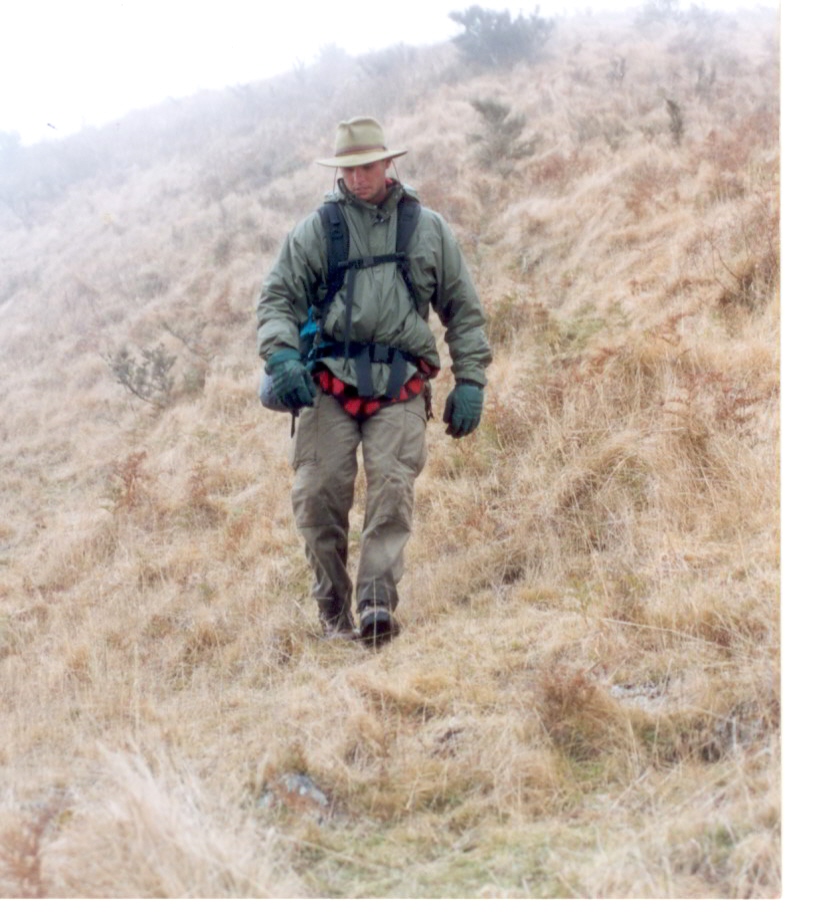
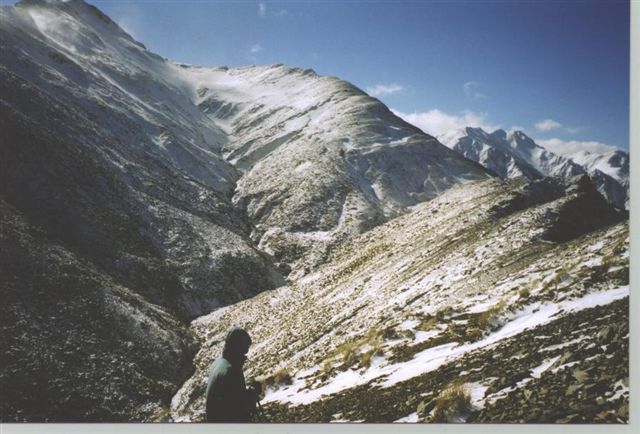
A few days after I wrote the prior post, Te Tiriti o Waitangi, a scathing, terribly written article was published by The New Zealand Herald, and authored by one Paul Holmes, whose claim to fame as far as I can tell is that he once pissed off the America's Cup helmsman Denis Connor who walked out of the supposed interview Mr. Holmes was conducting. He is, I suppose, in the world of broadcasting here in New Zealand, a big fish in a little pond. I have never watched him so I cannot comment upon that, but as to his lack of skill as a writer, and his rather stunning lack of knowledge, or empathy, with Waitangi Day and Te Tiriti I could easily do. Though the dark shadows which descend upon me, like watching a late afternoon storm roll over the rolling tops of the Whanahuia in the Ruahine as above, tell me it is a far deeper, far more reaching subject matter than simply Mr. Holmes. For in the Pakeha world I mostly step in I am very afraid that his rambling diatribe is seen as "good common Kiwi sense", "saying the things we all think but do not say", and that most dreaded utterance  "good to see someone tell the truth and not worried about political correctness".

These are the phrases, adjectives, and nouns I gleaned from the article. There is no need to duplicate here, as it's rambling disjointed discourse is not worth the trouble.

 "Hatred, rudeness, violence, hateful, hate-filled weirdo's, benefit provision, enable, repugnant, spitting, smugness, self-righteousness, neurotic Maori politics, bizarre, never defined principles,resentment, paying, bullshit, lies, loony, fringe, self-denial, hopeless, failure, fault, hating whitey, awful, nasty common, bamboozling, loony, looniest, irrational, bullying, bizarre,"... and so on it goes.

 Language and words to build bridges by indeed. Yeesh!

It all points out to me as a Pakeha trying to develop a political awareness and consciousness as to what all this is really all about, is just how difficult and hard the task in front of me really is, and what it entails. Which brings tears to my eyes thinking the path that these amazing Maori people I was around to listen to at Waitangi have walked, and the path those beautiful young Maori people are embarking upon. I can only think, reflect, and experience this from my own life, a middle aged white male, privileged to have walked where the institutions and system have been loaded my way. Language, education, history, opportunity, belief systems, all have been geared to my benefit, set up so I can walk through the world where the mere colour of my skin, and maleness, means I started further up the ladder. That is the truth. No wonder Phil Ochs topped himself, at least he could write beautiful songs and play the guitar, but that line between being real, and merely a hand wringing liberal seems to me a very fine one, and what I really want to get at is just the truth.


It seems life in my world comes down to two possible roads. We take the education and opportunities and we get highly comfortable or rich, and that is where our cultural " wisdom" comes from, those whom are wealthy and successful. Why for instance, Mr. Holmes has such utter crap even published in a newspaper. It is to perpetuate the system and history, defend it, and make sure the past stays in the past, except for how the system has written it. Or we struggle along striving to reach the level of the well off and rich, and soon settle for merely trying, live a quiet good life, and just as equally and staunchly defend the system as we are told. Then we die.

I am certainly not the former, and with one foot already in the latter I am deciding I would rather live. Yet extracting that one foot is like pulling it out of a deep muddy quagmire in the Ruahine. I guess maybe slightly like a tiny fraction of a tiny step in a tiny moment of how it has been for indigenous people everywhere in the world for centuries.

I'm not real sure where this murky track is taking me and what it all means. It is unlike any I have walked before. There have been many times in the mountains I have been afraid at the journey ahead, and the best solution is to always just shoulder the pack and head into the mist. Mauri Ora!


Kia ora once again to all the lovely people above whom I spent the journey to Waitangi amongst. It opened my eyes to so much about Te Tiriti and myself. Interesting times ahead!

On a different note to close this rather rambling effort. This post represents my 100th post on this blog! A good friend once told me that most blogs last a little over 12 months and fizzle out. I started this one mid 2007 mainly as a way to let my whanau and peeps back home have a look at my wanderings in the place I love so much, the Ruahine. So five years later I am still at it, have rambled around the mountains, developed this love of the whenua and Papatuanuku I suspect has always been within me, and now moving into other areas as well. To anyone who is out there reading this - Kia ora for your interest, and Kia ora and Aroha especially to the old names from way back. I have met some extremely interesting people, and many in person as well, via this place. So cheers, and I vow now, post 101 will be in the Ruahine! Kia kaha!
Aroha,
Robb

Thursday, February 9, 2012

Te Tiriti o Waitangi


Mataatua marae Waitangi weekend.
 I am not real sure why I am even here, on a marae for the very first time in my 19 years of living as a manuhiri (guest) here in Aotearoa. I am with a group of young, mostly Maori students, all accomplished, all heading towards being leaders in their various disciplines, and led by even more accomplished Maori women. I know I am here because of my wife's friendship with one of those women, Erika, whom I also think of as my own friend, but if I am truly honest I have to write that if I had not come to share this experience, my relationship with Tara, my wahine and a talented woman in her own right, may have possibly come to an end. So conflicting emotions see me sitting here amongst all these accomplished folk. I am glad Charlie Kloss is here as well.

Later evening: I was surprised by how the lump in my throat grew as we were welcomed onto the marae with the Powhiri. It says that our ancestors as well as those here at the marae are here with us. I get that. Later on after our dinner I was wandering about the grounds and came upon a little non- descript shed in the back and in front were piled loads of wood, which I am always interested in. I walked over to the stack of old huge logs, thinking these are too massive to split here for firewood, when a quiet voice spoke from inside the shed and asked, "Are you a carver mate?". Of course I answered no, and the voice then invited me inside where I found Jay, one of the Maori men who had greeted us during the Powhiri. I was surrounded by carvings, wood and bone, and all ataahua (beautiful). Jay showed me all around and each piece, and upon the walls the pictures of all his prior generations who had been carvers. How he was the only one left in his family to pursue the skill, craft and patience required. How hard it is now, in South Auckland, to find anyone young in his whanau to teach as he had been taught by his elders. We were then joined by Marsh (who has a lovely Maori name I was unable to remember and will not denigrate by trying to do so), the kaumatua who gave the korero (talk) at our Powhiri. Marsh has a full Moko, or facial tattoo. As a Pakeha we are conditioned to see this as something fierce and intimidating, yet Marsh spoke in a lovely soft voice as he showed me his bone carvings and spoke of his experiences of working with youth in South Auckland. At one stage he asked who I was, why I had come to Aotearoa, and so on. Somehow that got to the Ruahine and the old tawhairauriki staff I had once found to aid Taylor in crossing a flooded river we were going to have to cross for a long time that day when he was only 8 years old. I still have it, (and it sits beside me as I write this now). Marsh said I was meant to find it and should send it to Jay to carve for me. I walked away from that tiny shed with another lump in my throat.


The whanau I was with for the most amazing 5 days I have spent in Aotearoa.

Mataatua marae early morning. I stayed behind when the others went to the Otara markets and such and had a chance to talk to Rangi, the Maori woman who really ran the marae. She patiently explained to me the whole meaning of  the Powhiri, Tapu (Sacred), and Noa (Open), which after being welcomed onto the marae I am. Sitting with Rangi having a cup of tea was the the most incredible way to begin my day.


The wood and bone carving shed. Significant moments in humble places.


Kawiti marae. A most beautiful and peaceful place, yet has sheltered some of those most involved in real strife, hate, and fear beyond this graceful domain when no others would. No wonder shelter was both offered and accepted here in her bosom. The sleeping quarters in the foreground, the kitchen and dining area in back, and the ablutions block hidden behind. The cliffs behind are Tapu (Sacred) meaning no one is allowed amongst them. They remind me of mountains, or of Kura Tawhati in the south island. All places that exude spirit and mana.


A view a bit further back, just after we had arrived. You do not just bowl on into a marae, you have to announce your presence, be seen and acknowledged, then proceed to the Powhiri. Here Erika and Tara await before we gather for a karakia and proceed forward. The formality and significance of host to manuhiri (guest) is something we out here in our fast paced materialistic world have forgotten. Really it comes down to manners and respect, and an acknowledgement of the host and guest relationship.


Putting a wood stove in our own whare (house) was a very big thing for me. I love the whole process of gathering wood, preparing and building the fire and maintaining such a simple way to provide the whanau heat and comfort. This wood stove at Kawiti also provides the means to prepare food in those two big ovens on either side. In a way I saw it as the soul of the marae itself.


Waitangi Day: We are here to mark the signing of Te Tiriti o Waitangi, or the Treaty of Waitangi, which was signed in 1840. As a manuhiri I have always been vaguely aware that this was a significant day, and the way I understood it as put forth in the media was that it marked the birth of what is now New Zealand. Mostly it was a day off work, a chance to party a bit the night before and have a sleep in, or plan a tramp up into the hills and so on. For most Pakeha that would be a fair representation of the day. For a far larger proportion of Maori, Te Tiriti is a far more important document, a living breathing entity which represents what should be a way of life itself. So many Pakeha, media, corporations and business interests, and certainly our government see Te Tiriti as an old piece of outdated parchment that should simply be burned, as well as a hindrance to "progress", usually benefiting a small number at the top. I always find it interesting how the mainly white western world holds our own ancient documents so dear and closely to our bosoms, the Bible, the Magna Carta, the Declaration of Independence, the Constitution, and so on. Yet treaties signed with indigenous peoples of the world we saw, and still see, as being somehow invalid as quickly as they accomplish the short term purpose colonizers required, or simply an old outdated dead document. Well, I got news for such views, the biggest lesson I learned over the weekend is that Te Tiriti ain't going nowhere, and there are some fiercely brilliant Maori minds and bodies, and even a few Pakeha ones, who are in for the long haul. Mauri Ora!

The above photo is representative of another huge myth that was blown to bits, and another huge truth revealed for me. Every year before I came to Waitangi the spin put out by the government and media is that Waitangi Day is a volatile, explosive cauldron of Maori discontent. Radicals, terrorists, agitators, and separatists who harrass and threaten the government officials and others. The news papers and television show pushing and shoving, men with full faced Moko's filled with rage. This should be a day of celebration, not one of division is the common theme of the pakeha world. "We are all one". - No actually we are not, and I also learned that this day is no way a "celebration" for most Maori. It is in fact a very sad day, a day that highlights the fact that Te Tiriti is still being abused, neglected, and unobserved, that Maori continue to lead every possible negative statistic there is available. And we say, "well, we are all one, they have the same opportunities", "ferals", "warrior gene", "time to move on", ad nausea. What indeed is there to celebrate about the effects of colonization on an entire population of people whose land was stolen, whose language was nearly killed, and who are still being lied to about Te Tiriti o Waitangi?

The media puts out close up, panned in shots and film of angry protesters to make it look as if riots are about to break out, and the impression that hundreds of people are about to run wild. That bubble was burst for me in the above photo. Charlie and I were standing near where John Key and his entourage were being escorted off the marae. There was a small group yelling abuse and protesting, and there should be in my view, but in the media it was made to look as if he was in danger, that the kettle was about to boil over. Have a look. Do you think I would let my 9 year old son stand near what I thought would be a threatening situation? Does it look dangerous and out of control? I was there, and it wasn't. And the same applies to the next day's Hikoi to the Waitangi flagpole where again it was potrayed as a near riot, and the same type photo of an angry Maori man of twisted face and hatred. Had the camera panned a mere few feet away, they would have seen Charlie and I standing peacefully as so many others carried on a respectful and dignified korero. Never again will I believe our media and government. I will source my information elsewhere.


Charlie standing by Hone Harawira a few mere moments after Key and his dark suited entourage hustled off the marae. A bit later  Tara, Charlie, and I were walking back towards the political tent and Charlie asked us, "Why do men in suits look so strange?" - there was a Maori woman walking behind us and she burst out laughing and said to Charlie, "Because they are all thieves! What a great question!" She continued down the road laughing.


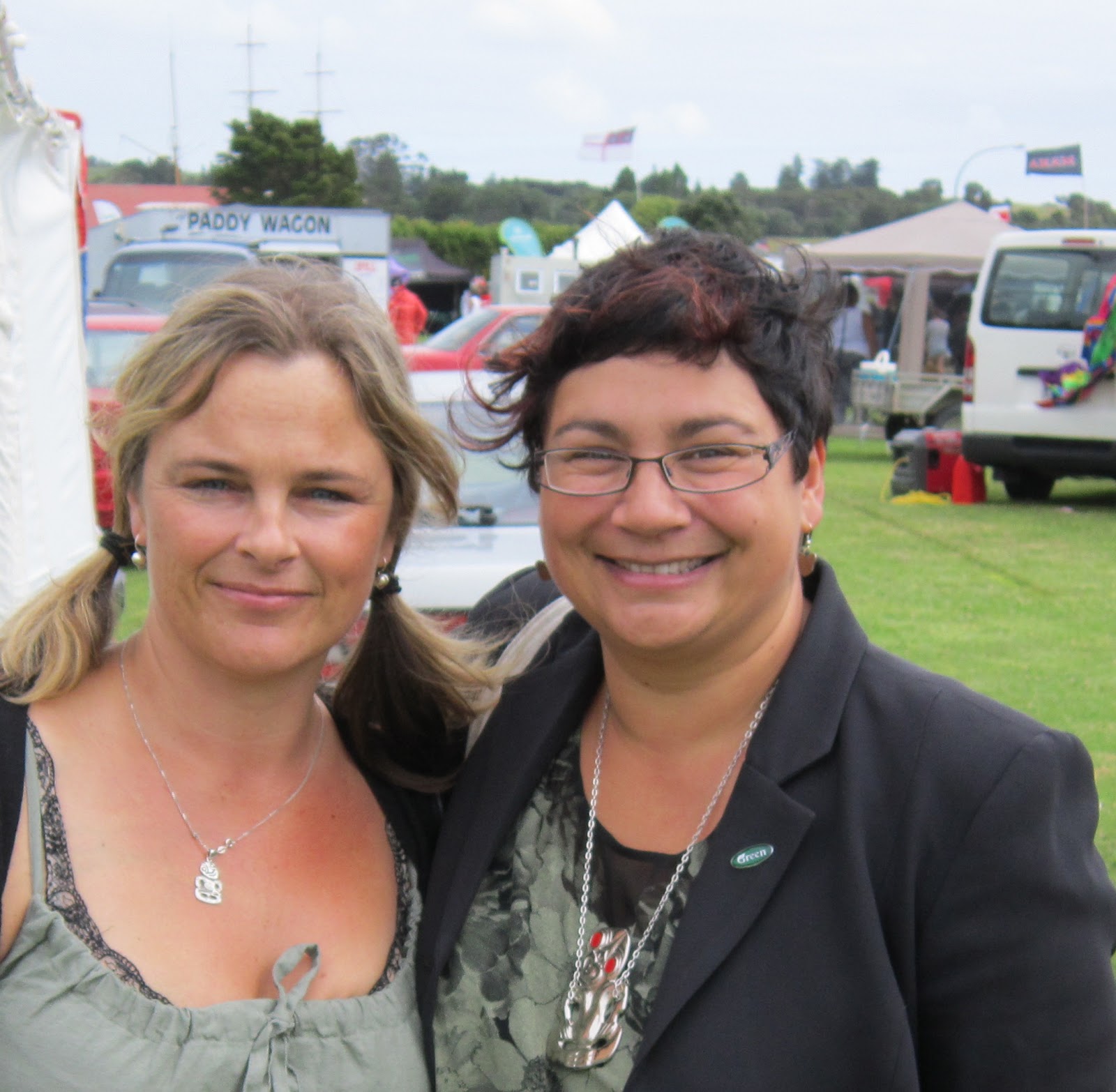
Above is Tara with Meteria Turei, the leader of the Green Party, and Tara's cousin whom she had not seen in many years. The biggest benefit for me being such an unimportant part of the group I was with is that I  was fortunate enough to listen to some amazing Maori voices put forth the real and true story of Te Tiriti and its on going relationship with all of us. People whom once again in our media, and by our government are portrayed as haters and wreckers, radicals and dividers, even a few as terrorists. To listen to these people speak, to listen to the passion, commitment, knowledge, and yes, Love, in their korero left me dazed, and honoured.


Tame Iti. To hear this man speak in such a quiet gentle manner, to feel emanating from him the hurt and pain of his journey, I actually had to look away at times. He did not talk of agendas of terror and plots HE may have put forth, as so commonly is put up by our media, he talked of what it is like to be sleeping peacefully in your own whare and have our own government terrorists break his doors down and pull his partner, daughter, and himself outside and separate them. He talked of how it felt to see the red laser dots on his face and body, of being on the ground with a snarling German Shepard snapping viciously at his face mere inches away. That happened here folks. And five years later the government has still yet to bring all this to trial. Why is that?


Giving the korero is Mereana Pitman. Seated are Moana Jackson in the middle, and to the left is Veronica Tawhai (the leader and facilitator of our group). Three beautiful and amazing minds and visionaries whom opened up a whole new view for how I see certainly Te Tiriti, but also the whole world. And with others we listened to, Tame Iti, Mike Smith, Annette Sykes, Hone Harawira, Metiria Turei and others, the fight to put Te Tiriti in its rightful place is in good hands. Combined with people in our own whanau, Erika Te Hiwi, Natasha McCombe, as well as the young brilliant minds I met and observed in the young students who came with us, it all gives me inspiration to change myself, and hope to change the world.


Dawn over Waitangi from the Upper marae.

So here it is, because I know there may be a few peeps who read these words and still see the above names and my own views as radical and dangerous. So, to paraphrase a bit from the wonderful Moana Jackson, whom I could sit in front of and Listen to for days at a time, from now on this is what I will ask of any Pakeha, or anyone who wants to question the rightful place of Te Tiriti in Aotearoa.

Please ask yourself four questions.
1. Would the King of France have woken up one morning around 1840 and decided he would cede all power, because ultimately this is about power, to the King of England, and what would the people of France have thought about that?

2. Why would a combined Maori population of up to an estimated 500,000 in 1840 cede power to a group numbering around 2000 settlers and missionaries? They could have, and probably should have run them into the sea. What they were attempting to do was to bridge a way to allow these people to live here in a way that was similar to inter-connections the various Iwi shared amongst each other as the indigenous people, through the bonds of marriage and history, so that quite simply the manuhiri would abide by the rules and behave themselves.  Hone Heke went directly to the source, to the King of England, to suss him out and get him to control his drunk, and out of control wild mob instead of the other option of simply running them into the sea. Te Tiriti was a way to let people stay here and yet still be guided by the principles of Tino Rangatiratanga. It is as simple as that.

3. Ask yourself what sort of world you want to live in, what sort of world you want your children, and your childrens children to live in and amongst? One can read most any post I have written on this blog to know how I personally feel about wild places, the earth, sea, and what we are doing to them. And now, having been on two marae over 4 days and living under the protection of Tino Rangatiratanga and how I was cared for, how I learned to pitch in and make it all happen, how much more aware of what is around us and how we treat one another, I have absolutely no issues at all with, again simply, a better way.

4. Have you actually ever been to Waitangi? If yes, I hope you feel a bit like I do, if no, I'll see you there.


The flagpole over Waitangi at dawn.


The real reason this is all so crucial and so important to get right.

"On life's eternal river
   we float on....and
   on, forever - like
   a stream of light
  enhancing our under-
  standing of human love,
  and life! Kia ora!
                         Hone Tuwhare

Kia ora to all the wonderful people I shared this experience with, and especially to those who put it all together and allowed me to be part of such an amazing chapter in my life.
Aroha,
Robb

Wednesday, January 25, 2012

A Swimmer's Lament

Charlie swimming blissfully like a little otter on a hot summer day. The Rangitikei not far from where it rolls out of the Ruahine.

Evening 25 Jan. 2012 - Charlie and I have just returned from the swimming pool at his school a few doors down from our house. We have a key over the summer holiday so after coming home from work on a very hot afternoon we headed down for a wee dip before dinner. As we swam and played I couldn't help but let my mind drift a bit to the mountains, and how on a long summers day, and sometimes even in the midst of winter if a staunch enough challenge is issued, the deep green tinted clear depths of a Ruahine mountain river pool prove so alluring. Perhaps I am spoiled by my time amongst the rivers, but the chilling embrace and the tingling of flesh and spirit afterwards are far more refreshing there than in the tepid waters of a city swimming pool.


Some days you get lucky enough to spend the whole day just meandering up and down the river, looking for the best pools to be embraced by. Above is the Pourangaki river, a ways down from the hut on a stretch with fast water and big pools. That, plus a hot day, adds up to loads of fun! We certainly do not have to worry about being thirsty.


John on the Kawhatau river on another brilliant summer day. Don't be fooled! Days like this are really very rare in the mountains, so when you get one it is best to grab onto it and relish each second. It is good to be reminded of such simple pleasures.


The Waikamaka river on possibly the finest summer day I have personally spent in the Ruahine in my near 20 years of being amongst them. The river was low, travel was easy, the sun was shining, and it was hot. Normally a dip into any mountain river is relatively chilly proposition and the stay in equally short. On this day the normally frosty reception negated by the heat and the days labour to arrive here. To sit in a mountain river in natures very own whirlpool was just simply a luxury. This is living!


A different scenario. A different time of year. But look at that pool just calling out. Nigel, well dressed to ward off the winter chill gazing into the lovely depths. Soon after I observed this scene I took off my clothes and crossed the river just down from the pool. I climbed onto that moss covered rock on the other side, braced myself, and jumped in. It was well over my head and like jumping into ice water. I emerged very quickly yelling and screaming and completely alive! I have no photo to verify this, well I do, but this was back in the age of film, and I did not convert that one to digital. You will have to trust me.

"I meet the Tukituki"
 No webbed feet or even talons
grip this moss covered greywacke
as I brace myself quite ungracefully
above the rivers song
I look to my mate for reassurance
none is forth coming except
anticipation of his own pleasure
Too late to back out now
I release myself of my clumsy perch
and for a brief exalting moment
hover above my doom
and plunge into the deep embrace
down into the clear darkening depths
familiar and welcoming
part of me wanting to remain
yet emerge I do bellowing
laughing and crying out for joy
My friend smiles and shakes his head
I dress and we go back down the river
I keep looking back
-written at Barlow hut 2004


Waterfall creek. No way out now!


John not long after me. It is an awesome pool.


Charlie carrying on the tradition of enjoying the rivers. Closer to home, and in the Tararua's but he has already done his share of Ruahine "swimming". Love the look on his face as he scrambles to get out of the late winter water.


Aroha,
Robb

Sunday, January 15, 2012

The Summer Tour that Never Was


Early Jan. 2012
 I sit here alone just above Sunrise hut, over looking the Waipawa valley, the Three Johns, and Te Atua Para Para. To the northwest lies Armstrong saddle and the route into my intended destination, the Maropea valley. But for now I am content to just sit here in the rare quiet stillness of this moment.

It is early evening and having climbed up and finding Sunrise hut empty, a luxury as it's 22 bunks and gas heater usually have someone, if not several people in residence. My preference is to add another hour or so to the day and cross over the saddle to Top Maropea, perhaps my favourite spot in all the Ruahine, but the lateness of the day, the empty hut, and being able to sit amongst this view when normally the wind dominates the scene, simply makes me pour myself a wee dram and relax, the days work done.

It feels somewhat as if the Ruahine are welcoming me, and understanding my reluctance and hesitation to even be here better than I do myself. A solo trip always brings out these feelings, but I also have a few lingering family issues which hang low over me like the onimous steely grey clouds descending upon this valley. I feel almost a sense of unease.  To sit here in the quiet hazy silence of an early mountain evening is a rare and distinct pleasure. I have, literally, fought for my life out there. And there she lies before me. Calm. Temptress.

Waipawa valley, the Three Johns, dipping low in the middle is Waipawa Saddle which separates Waipawa valley from the headwaters of the Waikamaka valley. On the right is the flank of the centerpiece of the area Te Autoaparapara.

The sun sets on Armstrong saddle and Patiki to the far right.


The sun fades on Te Atuaoparapara.

Evening: A breeze has picked up from the northwest, which is never a good sign. I may have missed my window to get across the saddle. But what will be will be. Why is it so easy to understand here that I can control what I can control, the weather not being one of those? Yet outside here I so often worry about what I cannot control in others, especially those I love dearly. There is a freedom in that which I struggle with. This evening my choice has been made, all the ramifications of that will be revealed soon enough.


Looking to the east and the plains of Hawkes Bay in the evening light.


To the north east and the far off Parks Peak ridge, an old familiar Ruahine place as well.

Following Day: Still here! In the night I was awoken by a shaking of the hut by gusting wind and then the sound of torrential rain on the tin roof. All I could do was roll over and nestle deeper into my down sleeping bag. The wind has been howling all day long, and having crossed the exposed saddle some 40 times I KNOW when to simply stay put. These are gale force winds and there is nothing for it but to just put the billy on for another cup of tea.
I have been thinking about my son Taylor. One of the reasons I wanted to traverse this area is I feel a sense of unfinished business in the Maropea valley from our last trip here some 7 months ago. Taylor wandered ahead while I stopped to photograph and observe a pair of whio on the river. Somehow he wandered right past Maropea Forks and continued down the river. I could not find him, and I spent the loneliest night of my life in the warm hut while Taylor shivered some place on the wintry cold mountain river. The next day the mountains returned him to me, but this time it is not the mountains he is lost in. I love him.


Tupare - or leatherwood. A hearty alpine shrub and tree which withstands the howling gales, rain, sleet, snow, and winter cold to thrive and grow, and even find beauty in such unforgiving terrain. Like the heart of any parent.

Evening: The wind howls even fiercer. I have trouble standing even in the relative protected shelter of the hollow where the hut sits. I know I would stand no chance of standing, much less moving on the exposed open tops a few metres away. The hut shakes and moans frightfully, and all I can do is trust in the sturdy construction and the guy wires which lash it to the ground. It is quite a storm. I will wait till morning and see if by some chance the wind abates and I can move. If not I will retreat back down the mountain and live to try another day.

Sunrise hut. When I first came here in 1993 it was a very small unimposing 6 bunk hut. Now it sleeps 22. It is anchored into the ground with a series of guy wires at the corners. I was thankful for that. It is hard to capture wind in a photo, but trust me, to walk from the hut to where I was standing was a struggle.

Aside from the near vertical mist and cloud rolling across, the indication of how strong the wind was can be seen by the tussock grass which is blown straight over. It too is a hearty rugged alpine plant well adapted to this environment. It just goes with the flow.

Morning : Still howling and raining, and I am retreating down the mountain and home. I am okay with that, as it is always these hills that hold the final say, and even if I was only here for a brief interlude and not what I expected, at least I was here at all. I will return.


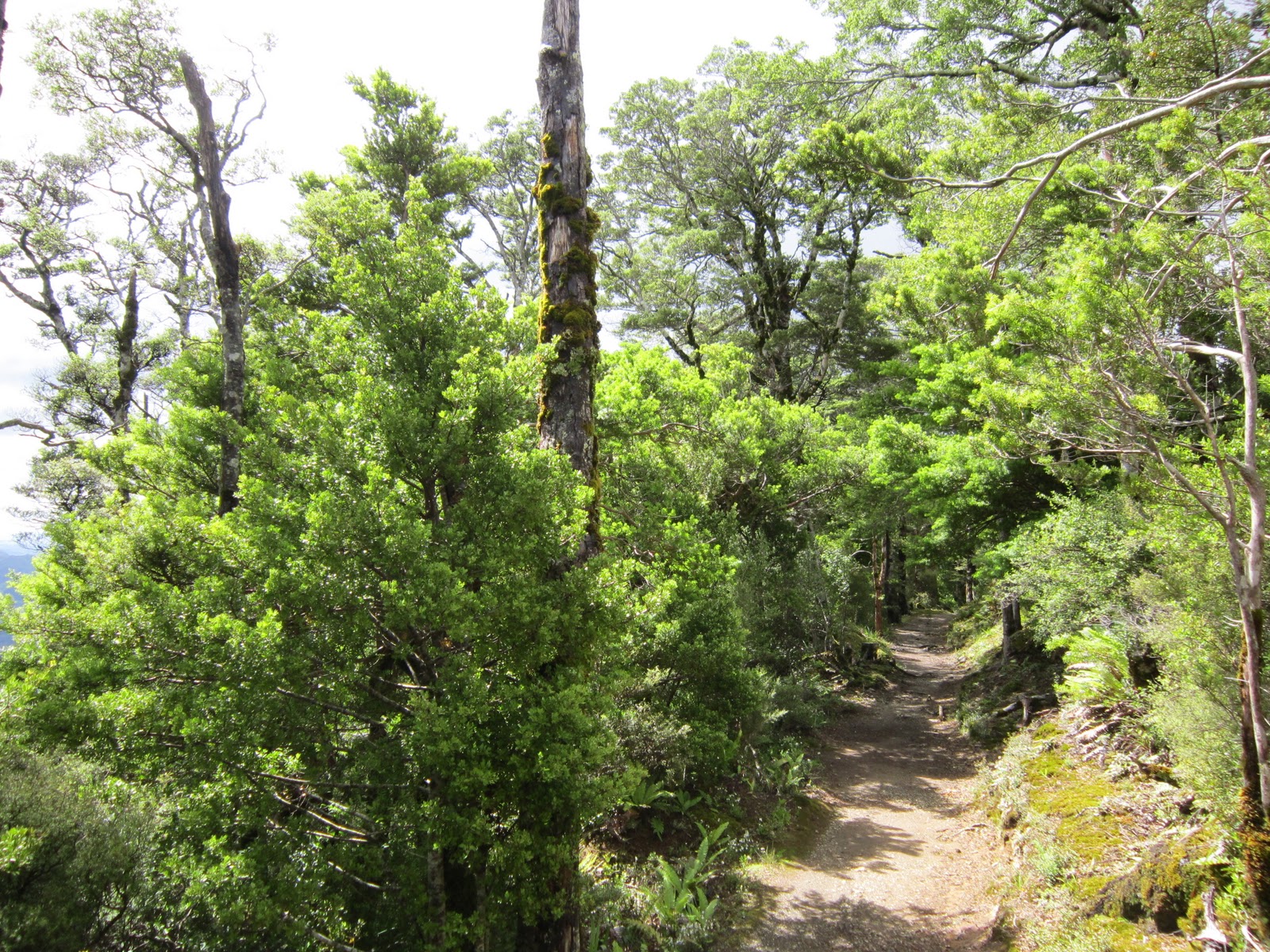
Down into the forest and home.
I end this meandering post with a poem by Sam Hunt, one of my favourite New Zealand poets. He captures the essence of what I was feeling, and how I felt up there in that storm on my summer trip that never was.

'Rangitikei Riversong"
A man can only
 find himself when lost
Such country, this,
 where all men are lonely
plateau, hawk, and rivermist

country where a man at last
might lose himself, an end of talk
find that gaunt faced other
man who stalks these ridges
plateau, rivermist, and hawk

no longer keeping eye
for crumbling edges
lovers or the weather
Listening, rather, to the river:
hawk and high plateau
rivermist below
                             Sam Hunt - Selected Poems

Mauri Ora!


Friday, November 18, 2011

Whanahuia Ora


11/11/11 Whanahuia range of the Ruahine - evening

A stunning campsite on the Whanahuia range on a lovely evening. John Nash and I climbed to the tops and Rangiwahia hut in the early afternoon and rather inclement weather. Late in the day the weather cleared and we quickly decided to pack up and head further up the range towards Mangahuia and camp. Our decision was validated by finding this small piece of flat gravel in the tussock. Just enough for our tent and a little room to sit, which is all we need. We are on the north side of the range looking into the valley know as Venison Gully and across to Deadman's Ridge with an unnamed stream running far below, we can listen to the muttering song up high.

We are being treated to one of the more spectacular sunsets I have been privileged to be part of in my time traveling in the Ruahine. The tussock is lit up to golden brown, then fiery red, in the distance the sun duels with the cloud and mist, treating us to a new vista like clicking through natures own digital camera in real time, and a slow moving bank of smokey cloud moves up the valley reminding us of a maunga taniwha as it crawls up the stream below poking and probing each gut and gully, then retreating back to the flat lands far below. John and I just sit here in the quiet silence of the mountains saying little even though we have not seen one another in some time.  Sometimes more is said not saying anything at all.


John earlier in the afternoon as we set up our little camp. Looking south east towards Mangahuia in the distance.


Settling in with a wee dram and the sunset.


The show begins.


Just a bit above our camp looking west toward the setting sun.


Looking down into Oroua valley the following day. Our destination, Triangle hut is a small red dot almost in the middle of the photo. A lovely spot, and though we could see it, was still many hours away.


Resting by a snow tarn as we make our way north before steeply heading down through the mud and treacherous footing down to the forest and the hut. A good place to refill our water bottles and have a snack before pressing on. A good place period.


Finally down into the high forest after a long battle with the descent. The sun came out and with still another hour or so very steeply down to the river time for some lunch (bagels, cheese, tomato, onion, and salami for me as John is a vegetarian), then a bit of a nap before pressing onwards. What's the hurry?


12/11/11 Triangle hut late afternoon
The rain gently patters on the tin roof, droplets drip slowly off the porch overhang as the Oroua river flows by. A cacophony of water surrounds us. I have seen, I have listened to this, many times before at this very spot, but it is always new, always different. I feel like I am home.
 John sleeps in his down bag as he was not feeling well today, another reason to take it slow and easy on the tops and down through the kaikawaka and tawhairaunui. I made John a few cups of tea and some hot soup and he was already feeling better, and what better spot to curl up in and dream. Sleep well e hoa!
So I have been just sitting here listening, brewing cups of tea in the billy, smiling and laughing. Gathered wood for the stove, and reflected on our day of traveling in the Ruahine. Mostly just smiling. This is my 9th visit here over the years. The hut book goes back to 2004 and the third entry is by John and I. It is barely a third full, so this is a place that is rarely visited, and being here 9 times in an honour I an humbled by. Pohangina Pete's name is here, as are a few others I have come to know in my time in these mountains. My time grows short, so moments like this take on even greater clarity and significance. One day I will be here forever.


John by the stone gorge a short meander up the river from the hut. The whole of the Oroua pours through this gorge, as can be seen by the place John stands. In 2004 the Oroua out on the flat lands flooded through rain up in here and caused untold millions of dollars in damage. The mountains are built for that. What is now farmland used to be "built" for that when it was just bush and forest. Now cleared and "productive" we blame Nature. This very spot tells a huge story.


Triangle hut just in the left side. In the hut book I found a poem I wrote back in 2008, my last visit here. One where I got stuck for 2 days when the river came up through incessant rain, and I sat watched the droplets fall off the porch.

"Hut day at Triangle"

I have used this day to my fullest ability
have run through the rain to use the facility
except in the course of that little caper
neglected to bring the toilet paper
I've chopped wood and stacked it quite high
more than enough for the next man by
sat on the porch just quietly thinking
about how many cups of tea I've been drinking
Rivulets of water drip down from the roof
offering me final and total proof
That a day spent here all toasty and warm
beats the hell out of being out there in that storm
21/12/08


Inside Triangle hut early evening.


Cooking tea. Fresh tomato, red onion and garlic, simmered to a sauce with tarragon and and a smidgen of rosemary, then served over pasta. Really roughing it!


13 November very early morning Triangle hut:
I sit on the porch with a strong mug of coffee and start to watch the mountain morning unfold. These are the days when John and I really have learned how to excel. A day of doing nothing with the whole day to do it. And feel no guilt, or remorse, or regret. To just have enjoyed these moments as much as we possibly can. Yet by the end of this day, the wood boxes will be full to over flowing, the hut cleaned, all the excess rubbish stuffed into bags we will carry out, which amounts to not much  here thankfully and gratefully. We will have walked up river and down, maybe even have tried to climb up some unexamined spur, (though I doubt that). And soon enough I shall be back sitting in this very spot as the sun passes over this valley far sooner than it does on the tops we camped upon. John and I will sit here with something stronger than this coffee in our tin mugs, and we will wonder where the day has gone.


Evening inside Triangle hut - The wood stove creaks and moans as it comes to life. Candle light accentuates, softens, and adds dignity to the already apparent charms of this back country hut as the sun sets on our second evening here on the Oroua river. Neither John or I were concerned with packing up and going anywhere today, particularly with the rain up here a fairly good indicator conditions would not be too pleasant up there. The frantic rushing we used to do, the 8, 9, 10 hour days on the go, the huge endless climbs and descents are for younger legs. At 51 and with a new hip I am content to stay here in spots I love so much and let them fold over me, and enjoy them on their own intimate terms. Like sitting in the high forests quietly and being absorbed by them, and in that stillness see the real forest revealed, so it is too by the rivers - the fact this charming little hut is here an added bonus. My legs are older indeed, but here my heart sings and my soul is young.


Back along the tops of the Whanahuia.


We had to stop on the tops to don warmer gear, but once we turned out of the wind it became calm and still once again. We stopped in the tussock for lunch and a lie down. The cloud rose up in the distance and revealed Te Hekenga, the first time we had seen it on this trip.


14/11/11 Rangi hut - evening. The sunsets in a brilliant show once again, just as it sets on this mountain experience. In the morning a 3 hour walk or so will bring us back to the car and soon back to the world. Though right now here in this moment that seems a long time away and we are content to linger here in the foolishness of things a while more.


15/11/11 morning - Ruapehu, Ngarahoe, and Tongariro, the volcanoes, shimmer in the distance. Taranaki glimmered further to the southwest as well, forced to flee there after fighting with Tongariro for the affection of the beautiful Pihanga. It is said that when Taranaki is covered in cloud it is weeping for it's lost love. It weeps often. I understand how he feels. As I get ready to head down this mountain I miss the Ruahine already.


Kia ora John, Kia ora Whanahuia, Kia ora Ruahine.
Aroha,
Robb